


County Says Federal Law Limits Action on Manville Garbage Trains
County Says Federal Law Limits Action on Manville Garbage Trains

By: Mike DiLalo
Published on June 17, 2026
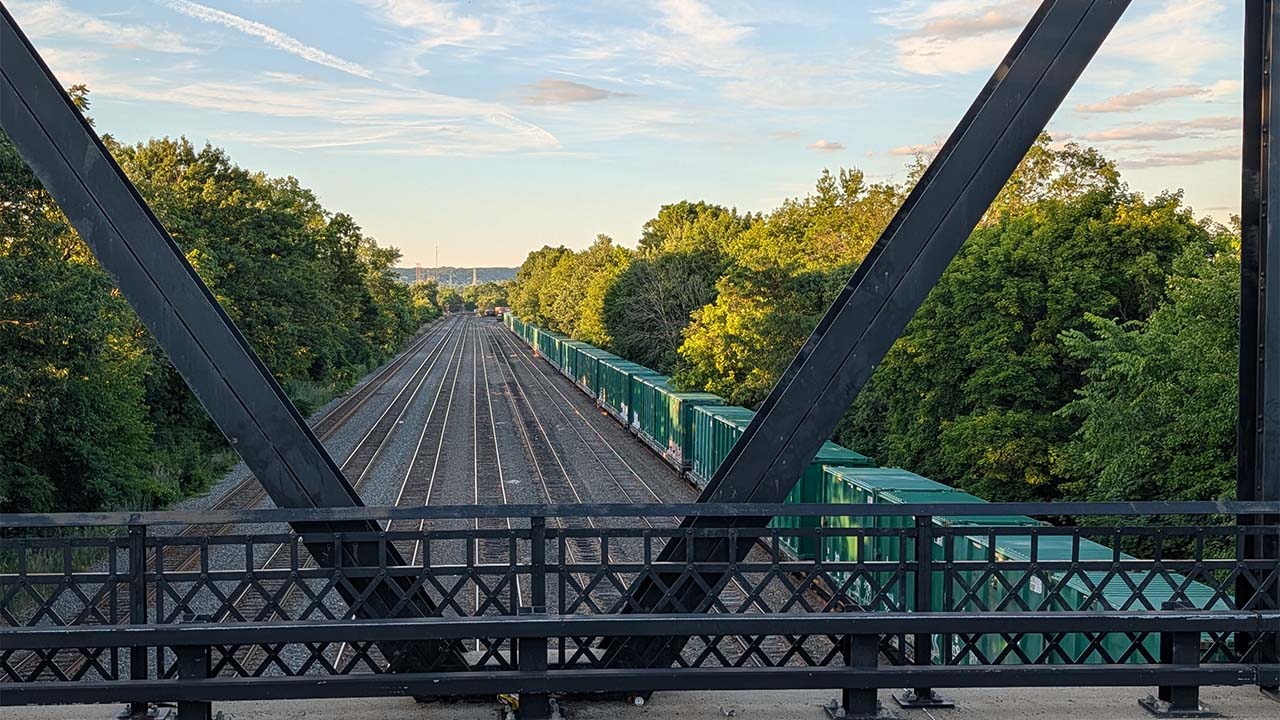
Somerset County health officials told the Manville Board of Health on Tuesday that federal railroad law limits the ability of state and local agencies to take enforcement action against garbage trains that have generated odor complaints from residents for months.
During the Board of Health's June 16th meeting, Michael McCarty, Deputy Director of the Somerset County Department of Health, provided an update on the ongoing issue. McCarty said county environmental health staff had been investigating complaints and reviewing possible enforcement options with the New Jersey Department of Environmental Protection (NJDEP).
According to McCarty, NJDEP advised the county that it could not pursue enforcement under either state odor regulations or state solid waste regulations.
"We thought that we were going to be able to enforce that under the solid waste code," McCarty said. "That's what we were kicking to the DEP for review, and they were like, 'No, you can't do that.'"
The update follows months of complaints from residents regarding trains carrying municipal solid waste that have been parked on rail lines through Manville for days at a time. Residents have raised concerns both directly with local officials, and on social media, citing persistent odors during warmer weather and trains that have remained parked in town for multiple days at a time.
McCarty said inspectors have responded to complaints and conducted numerous site visits since the issue began earlier this year. He estimated county staff have visited the area no less than twenty times to document conditions and investigate complaints.
County officials had hoped existing solid waste regulations might provide a path for enforcement when trains carrying putrescible waste remained parked for extended periods. However, McCarty said NJDEP provided the county with a court decision involving a similar enforcement effort by Middlesex County that NJDEP believes supports the same conclusion.
"It's unfortunate because we don't really have any recourse," McCarty said. "We don't really have anything that we can do to force them to move the train."
Borough Council Liaison Patricia Zamorski asked whether the trains could be parked farther down the rail line, beyond the Lost Valley bridge area and away from nearby residential neighborhoods.
McCarty said county officials would welcome such a compromise. Board President Jessica Nichols commented on the length of the trains, and if they can be shorter.
"That would be the hope," McCarty said. "That they would do something like that so that they could at least show in good faith that they're making an effort."
Councilwoman Zamorski later asked whether county officials could issue a ticket if a train remained parked for 24 hours without moving.
McCarty responded that Somerset County initially believed enforcement might be possible under the solid waste code. After reviewing the matter, however, NJDEP advised the county that it lacked authority to pursue penalties.
McCarty said Somerset County has elevated the matter to state and federal officials. He told the Board that the County Administrator plans to contact the NJDEP Commissioner directly to seek additional guidance. The DEP has also contacted the Federal Railroad Administration (FRA).
Federal Authority Over Railroads
The legal challenge facing local officials stems from federal laws that grant broad authority over railroad operations to federal regulators.
The Interstate Commerce Commission Termination Act of 1995 abolished the Interstate Commerce Commission and transferred regulatory authority to the Surface Transportation Board (STB). Federal law grants the STB exclusive jurisdiction over rail transportation and railroad operations. Courts have repeatedly held that state and local governments generally cannot regulate railroad operations in ways that interfere with interstate rail transportation. (Source: 49 U.S. Code § 10501)
The Federal Railroad Administration oversees railroad safety and maintains a public reporting process for alleged violations and complaints. Because railroad operations are governed primarily at the federal level, local governments often face substantial legal limits when attempting to regulate train movements, rail operations, or the use of railroad property. (Source: National League of Cities)
What Happens Next?
For now, county officials appear to be in a holding pattern while awaiting additional guidance from NJDEP and federal regulators.
McCarty noted that small exceptions may exist in situations involving hazardous waste material releases or certain privately owned rail lines. However, he indicated those exceptions do not appear to apply to the current situation involving municipal solid waste containers.
Residents who wish to document concerns can submit reports through the Federal Railroad Administration's online alleged violation reporting system.
During the meeting, McCarty said county officials have been directing residents to the FRA because local health officials currently have no mechanism to compel the railroad to move the trains.
When submitting a report, residents should include the date, time, location, duration of the train's presence, and any impacts experienced whenever possible.
The violation reporting form can be found here: Federal Railroad Administration Alleged Violation Reporting Form.
The County's Administrator is expected to continue discussions with NJDEP leadership, while county health officials await additional guidance and determine whether any remaining state or local remedies exist. Officials say they remain unable to compel the trains to move while those discussions continue.
More Stories

Manville Comes Together for Alex Monto
Aug 23, 2026

NJOP/NJRP to Host Hurricane Ida Program Sunday
Aug 29, 2026